

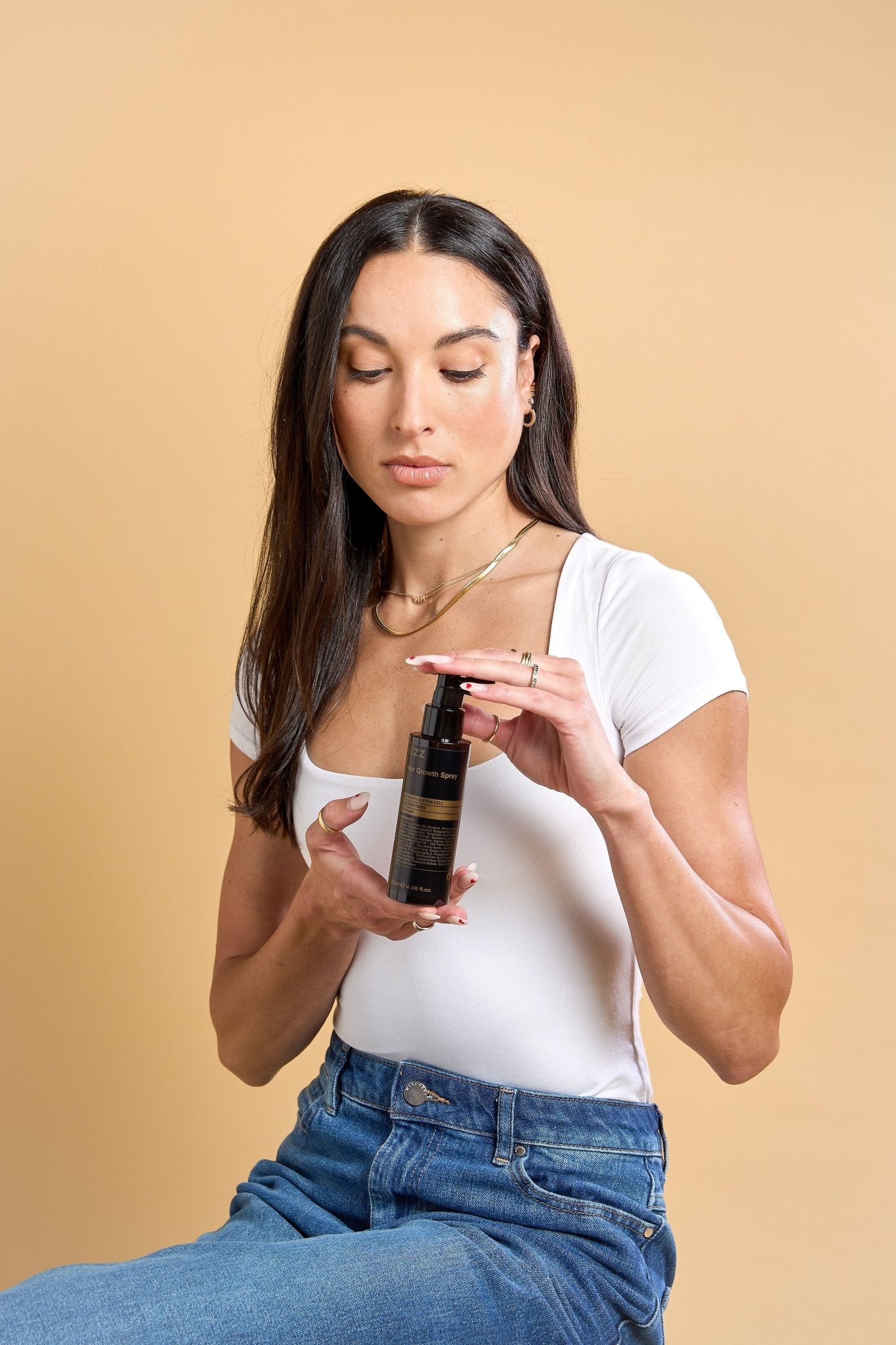
The Tangle of Tension: How Stress Actually Affects Your Hair
We’ve all heard the phrase, "I'm so stressed, I'm pulling my hair out!" But for many of us, the reality is a little quieter and a lot more frustrating: you’re brushing your hair in the morning, and suddenly, the brush looks a little fuller than usual. Or maybe you notice your ponytail feels thinner.
It’s not just in your head, stress and hair loss are scientifically linked. But the good news? It’s often reversible. Let’s untangle the science behind why stress messes with your mane and, more importantly, what you can do about it.
The Science: Why Does Stress Make Hair Fall Out?
Your hair follicles are sensitive. When your body is under chronic stress, it shifts into survival mode or in fight-or-flight mode. It prioritizes essential functions, like keeping your heart pumping and lungs breathing, and diverts resources away from non-essential functions—like growing hair.
Specifically, stress triggers the release of cortisol or known as the stress hormone. As a result, having a high level of cortisol can disrupt the natural growth cycle of your hair follicles.
The Big Three: Conditions Triggered by Stress
Stress doesn't just cause "hair loss" in a general sense; it typically manifests in three specific ways:
1. Telogen Effluvium (The "Shedding" Phase)
Your hair isn't just magically growing or not growing, it follows a very specific three-stage lifecycle. Normally, the hair on your head is split into different teams working on different hair growth cycles.
Technically, when a major stressor hits, it shocks your system, disrupting your hair growth cycle and causing it to short-circuit. To conserve energy, your body essentially forces a huge number of hairs out of the growth phase and straight into the resting phase.
-
What happens: Significant stress pushes large numbers of hair follicles into a resting phase (telogen).
-
The delay: You might not notice it immediately. Often, the hair falls out suddenly when you comb or wash it, about 2 to 3 months after the stressful event.
-
The good news: This is usually temporary. Once the stress is under control, the hair starts growing back.
2. Trichotillomania (Hair Pulling Disorder)
Trichotillomania pronounced as trik-oh-till-oh-may-nee-uh, often referred to as “trich,” is also known as hair-pulling disorder. It is a psychological and behavioural condition and is classified as a Body-Focused Repetitive Behavior (BFRB), similar to nail-biting or skin-picking.
-
What happens: This is a psychological response where stress, anxiety, or boredom creates an irresistible urge to pull out hair from the scalp, eyebrows, or other areas.
-
The result: It creates patchy bald spots and can damage the follicle over time if not treated.
3. Alopecia Areata
Meet the third and most unpredictable member of the stress-hair trio. Telogen Effluvium is a system “shutdown.” Trichotillomania is a behavioural response. But Alopecia Areata? That’s your immune system mistaking your hair follicles as a threat. It’s an autoimmune disease.
-
What happens: This is an autoimmune condition where the body's immune system attacks the hair follicles.
-
The stress link: While genetics play a huge role here, severe stress is often the "trigger" that flares up the condition, causing round, smooth bald patches.
|
Condition |
Telogen Effluvium |
Trichotillomania |
Alopecia Areata |
|
Mechanism |
Cycle Disruption |
Behavior / Compulsion |
Autoimmune Attack |
|
Pattern |
Diffuse thinning (ponytail shrinks) |
Irregular, broken stubble |
Smooth, round, coin-sized patches |
|
Stress Role |
Direct Cause |
Emotional Trigger |
Environmental Trigger |
|
Key Sign |
Hair in the shower drain |
Hand constantly near head |
Sudden bald spot |
How to Bounce Back: Saving Your Strands
If you suspect stress is thinning your crown, don’t panic that just adds more stress!. Here is your recovery toolkit:
-
Fuel the Follicles: Your hair needs building blocks. Focus on protein, Iron, Zinc, and Vitamin D. Think eggs, spinach, fatty fish, and nuts. Check out our guide on the essential vitamins and minerals your hair needs to thrive.
-
Sleep it Off: Sleep is your best buddy because when you sleep your body repairs itself. Aim for 7–9 hours of quality rest to lower those cortisol levels.
-
Move Your Body: Exercise increases blood flow, including to your scalp and naturally reduces stress hormones.
-
Be Gentle: When your hair is shedding, it is fragile. Avoid tight hairstyles, high heat tools, and harsh chemical treatments until you see regrowth.
Important Note: Always remember to start with its root, hair recovery needs nervous system recovery. Additionally, if your hair loss is sudden, patchy, or accompanied by other symptoms, always consult a dermatologist. It’s important to rule out thyroid issues or nutritional deficiencies.
The Takeaway
Your hair is often a mirror of your overall health. If it’s shedding, it might be your body’s way of waving a white flag and asking for a break. Be patient with yourself, hair regrowth takes time, but by managing your stress today, you are investing in a healthier, fuller head of hair tomorrow.
The best results come from a consistent routine: manage stress, nourish your body, and support your scalp daily with EZZ DNA hair growth products to encourage stronger and healthier-looking hair over time.


